How to Tell If Eggs Are Fresh: 4 Reliable Tests
The float test, the shake test, the sniff test and the date codes — how to know if an egg is fresh or should be tossed.
4 min read · Updated November 4, 2026
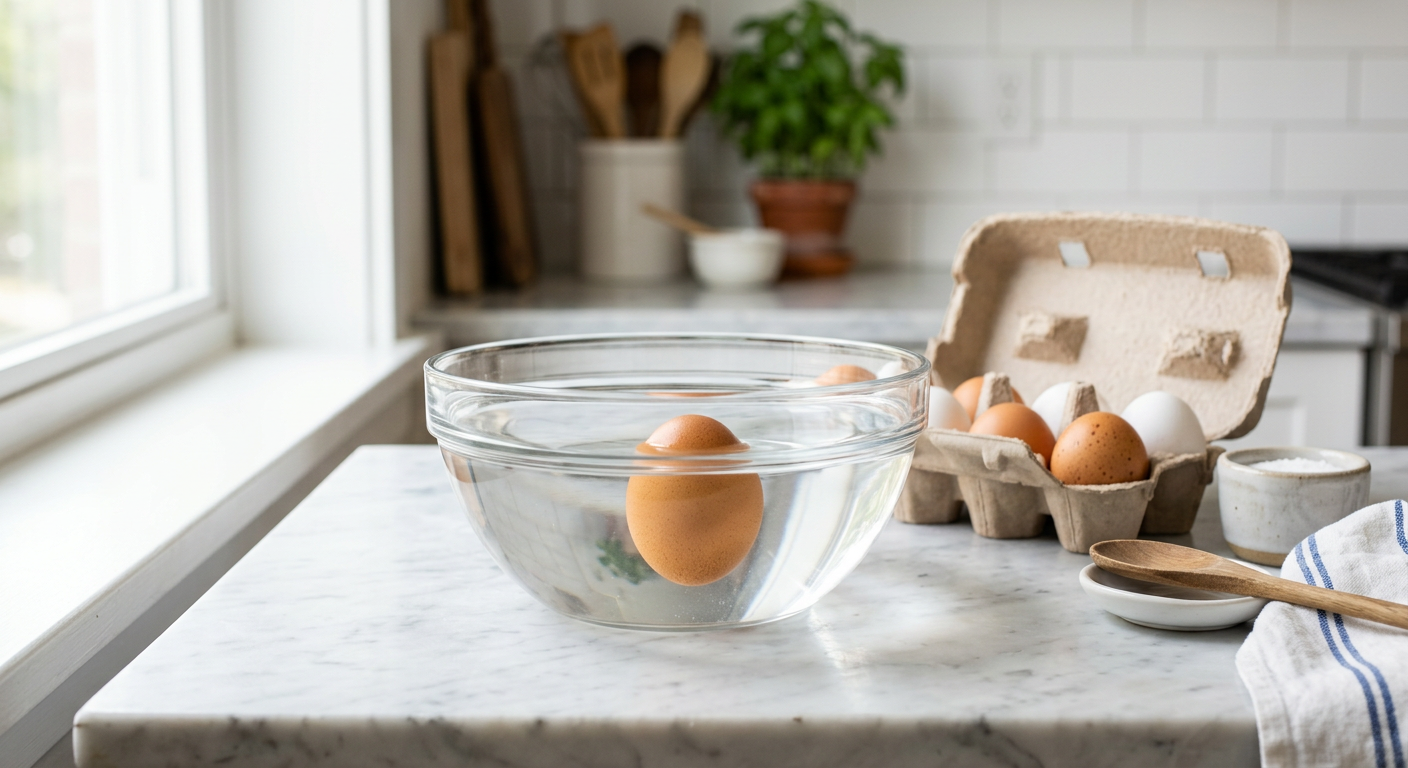
The float test
Place the egg in a bowl of cold water. Fresh eggs sink and lie flat; older eggs stand upright on the bottom; eggs that float should be discarded. Floating happens because the air cell inside the shell grows as the egg ages and moisture escapes.
The shake test
Hold the egg to your ear and shake gently. A sloshing sound means the interior has thinned and the yolk moves freely — a sign of age. Silence is good.
The crack test
Crack the egg onto a flat surface. A fresh egg holds a compact, domed yolk with thick whites that cling to it. A flat, spreading white and weak yolk means the egg is old — still safe if it smells clean, but better for baking than frying.
Dates and storage
Refrigerated eggs keep 3-5 weeks past the pack date. Store them in their original carton on a shelf, not the door, where temperature swings degrade them faster. Never wash eggs before storing — it removes the protective cuticle.
Frequently asked questions
Do eggs float when they are bad?
Floating means the air cell has grown large with age — the egg is old. It is not automatically unsafe, but combined with any off smell it should be discarded.
How long do eggs last in the fridge?
Refrigerated in their carton, eggs keep 3-5 weeks after the pack date with minimal quality loss.