Egg Substitutes in Baking (And When They Work)
Flax eggs, applesauce, aquafaba and more — what each egg substitute does in baking, with exact conversion ratios.
6 min read · Updated November 4, 2026
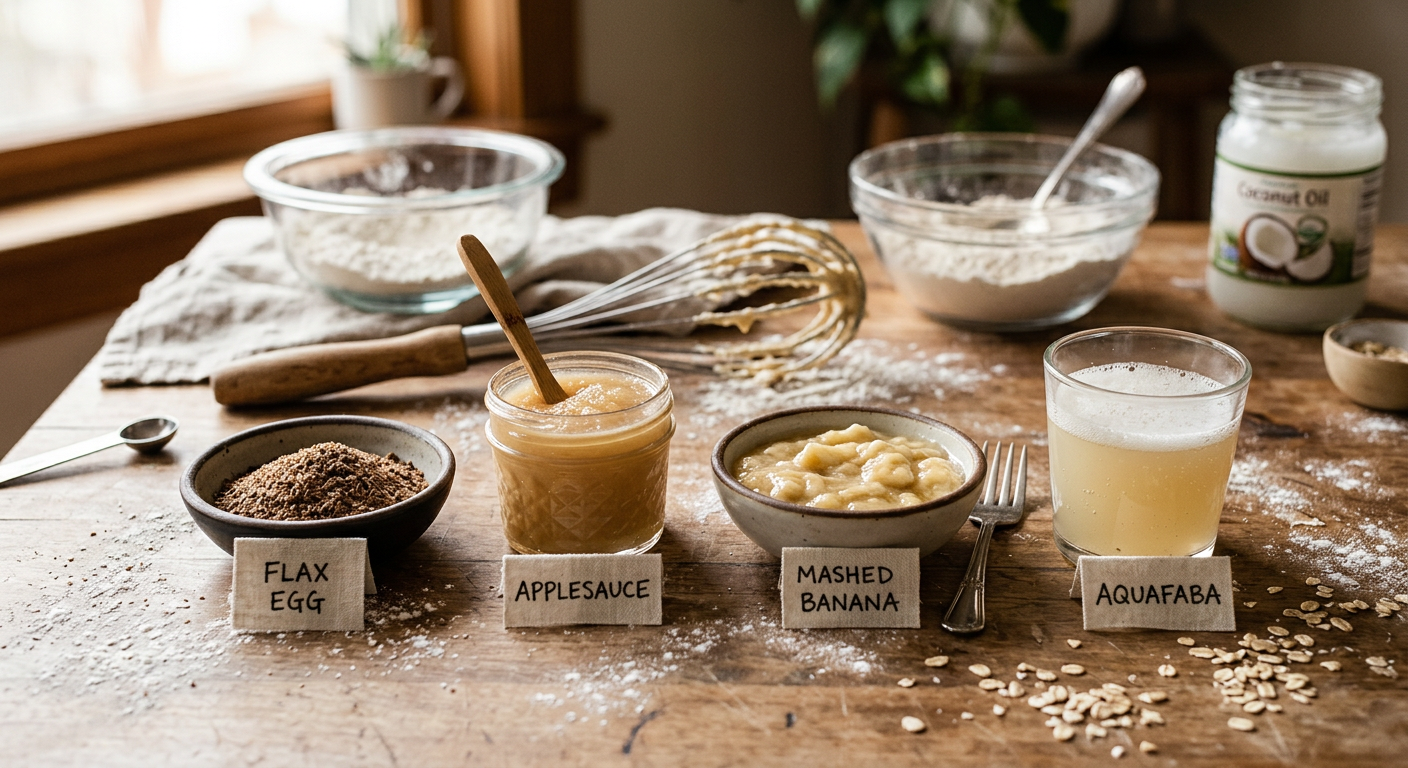
First, know what the egg does
In baking, eggs bind, leaven, add moisture and enrich. Choosing a substitute means deciding which job matters most in your recipe — there is no universal swap.
The substitution chart (per 1 large egg)
Tested ratios that work:
- Flax egg: 1 tbsp ground flaxseed + 3 tbsp water, rested 5 minutes — best for binding in cookies, brownies, muffins
- Chia egg: 1 tbsp chia seeds + 3 tbsp water — like flax but slightly firmer texture
- Applesauce: 1/4 cup — adds moisture, best in quick breads and cakes (reduce other sugar)
- Mashed banana: 1/4 cup — moisture plus flavor; pairs with chocolate and spice bakes
- Aquafaba: 3 tbsp (chickpea brine) — the only substitute that whips; use for meringues and mousses
- Yogurt: 1/4 cup — moisture and tenderness in cakes
- Commercial replacer: follow package ratio — most reliable for vegan baking at scale
When you cannot substitute
Egg-heavy recipes — souffles, custards, meringue-based cakes, chiffon — rely on eggs for structure itself. Substitutes fail here. The good news: this is a site for people who eat eggs.
Frequently asked questions
What is the best egg substitute for baking?
For binding, a flax egg (1 tbsp ground flax + 3 tbsp water) is the most reliable all-rounder. For moisture in cakes, 1/4 cup of yogurt or applesauce works best.
Can I use aquafaba instead of eggs?
Yes — 3 tablespoons of aquafaba replaces one egg, and it is the only substitute that whips into foam, making it suitable for meringues and mousses.